



Hydropower
The Columbia River and its associated tributaries comprise one of the major economic and environmental resources in the Pacific Northwest. Originating in the Rocky Mountains in Canada, the Columbia River and its offshoots - including the Snake River - extend a total of 1,243 miles to the Pacific Ocean. Beginning in the 1930’s the Columbia River system has been developed with over 250 hydropower dams and about 200 non-powered dams (built for other purposes such as irrigation and flood control). Today, the Columbia River Basin hydropower system delivers carbon-free, renewable energy that, on average, supplies about half of the electricity generation in the region.
Columbia River Basin: Tributaries and Dams
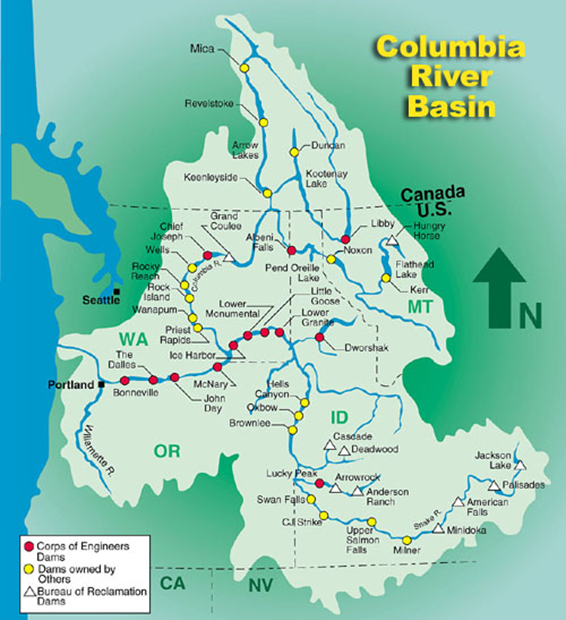
The current U.S. portion of the Columbia River Basin’s hydropower system has a nameplate capacity of about 34,000 megawatts and is home to the nation’s largest capacity hydropower facility - the 6,500 megawatts Grand Coulee dam in Washington state. Because of limited storage, the hydropower system cannot sustain that capacity during power production for very long. An average hydropower year produces about 16,000 average megawatts of electricity, although this varies significantly from year to year depending on weather conditions and snowpack levels. The snowpack accumulates in the mountains during winter and then melts to produce runoff during spring and summer. There are four major multi-purpose Federal projects with large storage reservoirs (Grand Coulee, Libby, Hungry Horse, Dworshak) that allow the hydropower system to shape the natural flow and store limited volumes of capacity to best match electricity loads and maximize interactions with other generating resources.
The operational flexibility and generating capability of the Columbia River Basin hydropower system has been reduced since 1980 primarily due to efforts to better protect fish and wildlife. Over the past forty years, the pattern of reservoir storage and release has shifted some winter river flow back into the spring and summer periods during the juvenile salmon migration period. In addition, minimum reservoir elevations have been modified to provide better habitat and food supplies for resident fish.
Repowering Existing Hydropower Projects
The age of new hydropower development in the region is largely behind us, with over 75% of the projects currently operating in the Pacific Northwest constructed between 1940 and 1970. While there are limited opportunities for large-scale new development consistent with the Council’s Protected Areas, there are opportunities for new small hydropower, powering existing non-powered dams, pumped storage, and repowering existing hydropower projects.
Vintage of Regional Hydropower in Operation Today

As the regional hydropower system ages, there is a widespread effort among owners and operators to upgrade and refurbish older projects through equipment replacements, generator rewinds, and installation of new turbines. Repowering and replacing components at a hydropower project can result in increased efficiency (more megawatt hours produced from the same nameplate capacity) and/or increased capacity (new turbines and equipment that enhance the overall capability of the project).