



Council briefing: Emerging technologies seek to expand electricity grid’s resource mix in the Northwest
Panel features Fervo Energy, PacWave, and Helion
- February 26, 2026
- Peter Jensen
Emerging technologies could reshape the way electricity is generated in the Pacific Northwest in the future, although major questions linger on their costs and timelines to commercial viability. The Council’s upcoming Ninth Power Plan will cover the years 2027-2046, and assure the Pacific Northwest of an adequate, efficient, economical, and reliable power supply. Because these supply-side emerging technologies could play important roles in the future grid, the Council heard a briefing about three options at its February meeting in Portland.
Panelists included Ben Serrurier, Director of Government Affairs and Policy at Fervo Energy, Justin Klure, Manging Director with Pacific Energy Ventures, and Tom Bugert, Senior Director of State and Local Affairs with Helion. Fervo is a next-generation geothermal company based in Houston, Pacific Energy Ventures is a consultant working on PacWave, which seeks to develop wave energy generation sites off the Oregon Coast, while Helion is headquartered in Everett, Wash., and is developing nuclear fusion prototypes in the Pacific Northwest. (Read presentation | watch video)
These are just three examples of emerging technologies. Others are under development in the region and across the U.S., such as small-modular nuclear reactors (SMR) or iron air batteries. To address the uncertainty inherent to technologies in this early phase of development, the Ninth Plan is using a proxy approach for supply-side emerging technologies. Staff has also developed an approach for analyzing emerging technologies on the demand-side, such as energy conservation or demand response.
The proxy approach for supply-side resources allows Power Division staff to test and evaluate if, how, and when attributes of emerging technologies fit the power system’s future needs, without being overly proscriptive of one particular technology whose future costs and timelines to commercial viability are uncertain. Staff are currently conducting resource optimization modeling that tests future buildouts of the Northwest’s electricity grid over the next two decades, to find a cost-effective portfolio of supply- and demand-side resources that meet the growing and evolving need for electricity in the region.
Staff has developed several proxies covering emerging supply-side technologies. This includes clean baseload, which is based on an SMR but whose attributes are broad enough to encompass other emerging technologies, including next-generation geothermal, wave energy, or fusion, among others. The other proxies cover clean long-duration storage (based on an iron-air battery), and clean peaker (based on a hydrogen plant with on-site electrolysis). These proxies are also broad enough to encompass other types of clean long-duration storage and clean peaker technologies. The Council’s models will be able to analyze whether and when these resources’ attributes fit specific needs of the future grid.
Fervo Energy explores hot rocks
Geothermal has been used for decades in the U.S. and globally for power production and space heating. Serrurier discussed how next-generation geothermal technology seeks to develop much larger amounts of clean-energy power production at economical scales, by tapping into geothermal resources that are much deeper below the Earth's surface. This requires advanced drilling techniques borrowed from the oil and gas industry, except they’re drilling granite instead of shale.
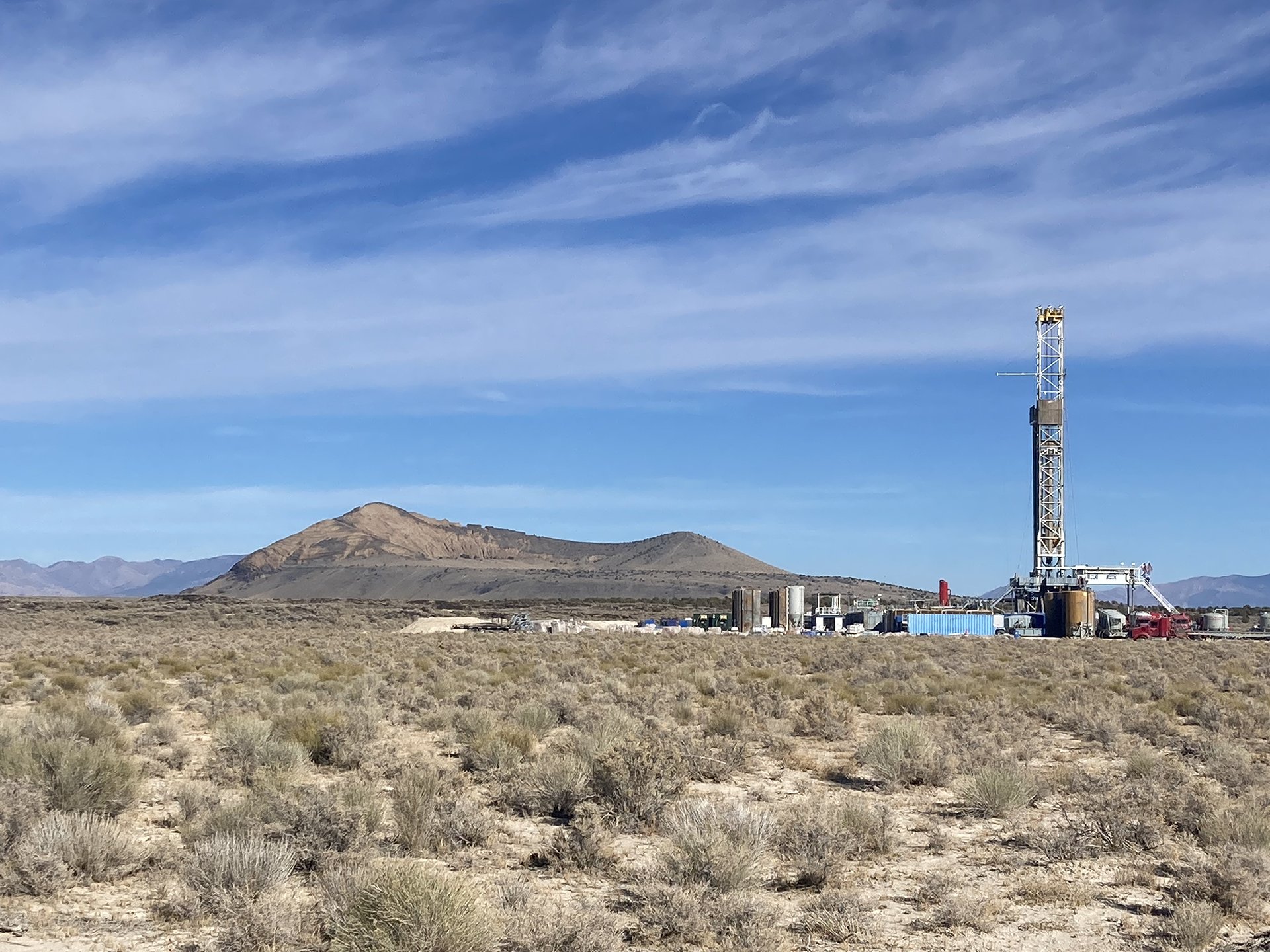
The company has been drilling test sites, including in Utah, with partners such as Google. Fervo’s wells are drilled to a depth of at least 8,500 feet, including new test projects that are reaching down to 11,500 feet and accessing temperatures exceeding 500 degrees Fahrenheit, which is used to generate electricity. For scale, the Empire State Building is 1,250 feet tall, one mile is 5,280 feet in length, and the deepest part of the Grand Canyon reaches down to 6,000 feet.
The company is developing its first utility-scale project in Utah, which is planned to be 500 megawatts when finished. It’s planning to develop the first 100 MW in 2026. While the drilling techniques are advancing to achieve greater depths allowing for faster, more abundant and more efficient access to geothermal resource, the costs, especially upfront, of such projects are still high and the energy they produce yet unproven at commercial scales. Transmission system access will also be a key challenge in the Northwest, because the drilling sites are often remotely located and will need to be linked with loads via new and expanded transmission lines.
Harnessing wave energy
PacWave is the only grid-connected, pre-permitted, open ocean wave energy test facility in the U.S. Located 7 miles off the coast of Newport, Ore., it’s developed and operated by Oregon State University and is primarily funded by the U.S. Department of Energy.
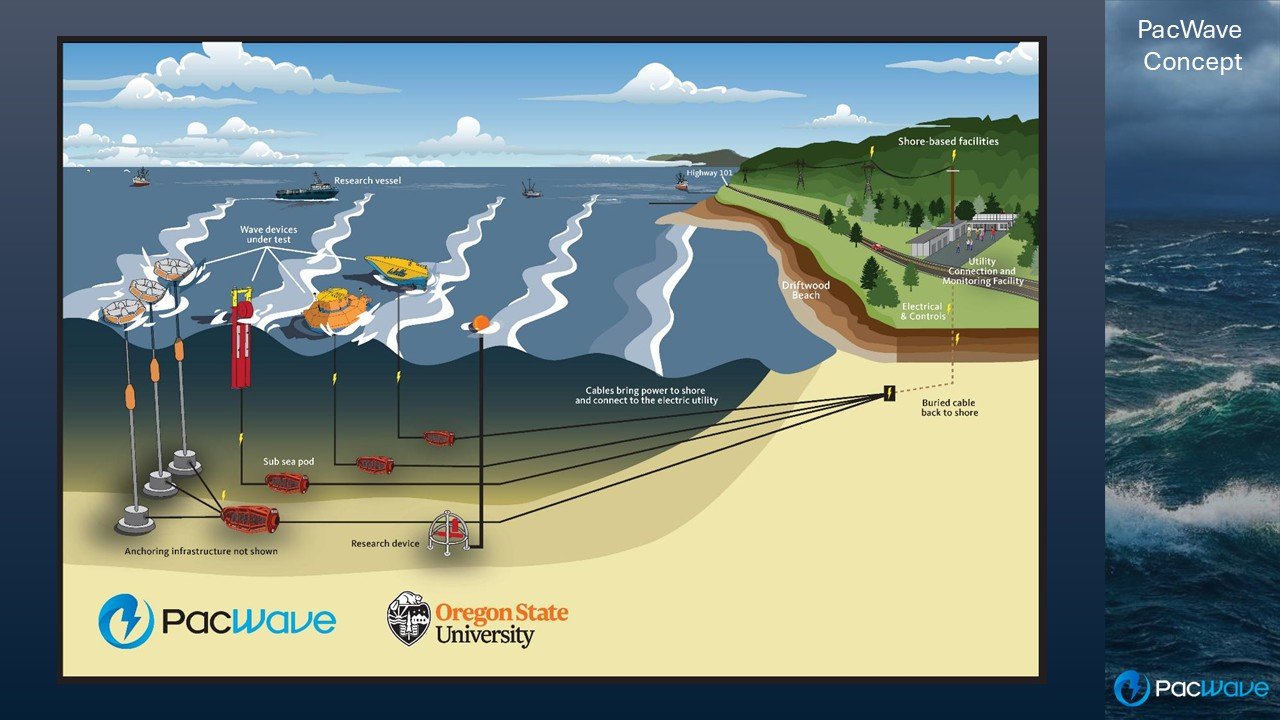
The project began in 2011 with feasibility studies, and started construction in 2021. Klure said in July 2025, U.S. Energy Secretary Chris Wright approved PacWave to move into its operational phase, and in September it signed a five-year power purchase agreement for the test energy with the Bonneville Power Administration at a wholesale market rate. The project completed its interconnection agreement with Central Lincoln People’s Utility District in November, and finished construction in that same month.
Now transitioning into the operational phase, PacWave’s current activities include monitoring seafloor habitat, organisms, and acoustics, as well as wave and current resource development. The test project aims to begin delivering power generation to the grid later in 2026. Proponents state that the project will help demonstrate the viability of wave energy technology in the hopes of bringing costs down to levels that would be cost-competitive with other generating resources.
Advancing nuclear fusion
Similar to geothermal, nuclear energy also has a decades-long history in the U.S. and internationally, although Helion’s fusion prototypes aim to create energy using a fundamentally different mechanism. Traditional nuclear power generates electricity through a process called fission, which splits atoms and creates energy. Fusion produces energy by combining, or fusing, atoms to create a single atom.
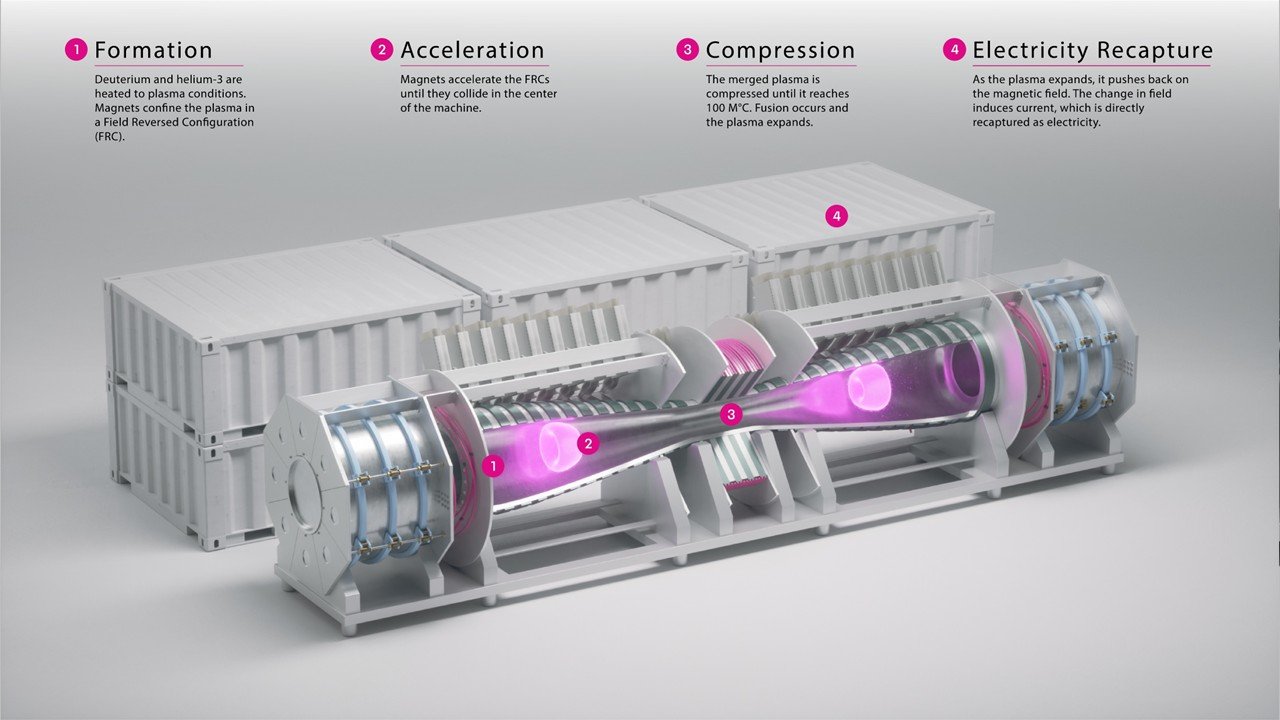
Helion began operations at its facility in Everett, WA, in 2024 and testing is ongoing to demonstrate electricity production from fusion, Bugert said. The company has also partnered with Microsoft and Chelan PUD to develop the world’s first large-scale fusion power plant in Malaga, which is on the banks of the Columbia River near Wenatchee. The project is under construction and aims to begin generating power by 2028. The minimum for power production is 50 MW, Bugert said.