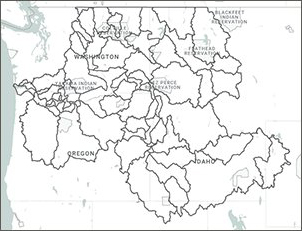

See plan below, including Management Plan sections (and supplements, where they exist) which were formally adopted as amendments to the 2000 Fish and Wildlife Program (and continue to be part of the 2026 Program).

Flathead Subbasin Plan
Assessment
Inventory
Management Plan
Appendices
1. Agencies and their jurisdictional responsibilities
2. Climate summaries
4. Brief geologic history
5. Land forms
6. Land-type association descriptions
7. Natural vegetation communities
8. USFWS listed and candidate species
9. General Descriptions of Major Wetland Plant Communities in
the upper portion of the Flathead Subbasin
10. Habitat type groups
11. Descriptions of habitat groups
12. MFWP comments
13. Aquatic and terrestrial vertebrate species occurrences
14. CSKT sensitive species and heritage program ranks for species
15. Red and blue-listed vertebrate and vascular plant species
16. Listed species and species of concern by agency
17. Excerpt from Critical Lands Status Report
18. Excerpt from Return to the River
19. Excerpt on the Limnology of Flathead Lake
20. 303(d) Impaired Waters Database
21. Barriers map
22. Draft nutrient management plan and total maximum daily load
23-25. Bull trout baseline conditions
26. Qualitative Habitat Assessment (QHA): Stream and Lake Habitat Attribute Scores
27. Target species descriptions
28. Geomorphology
29. Ecologically Significant Wetlands: North Fork
29b. Ecologically Significant Wetlands: Flathead, Stillwater, and Swan
30. Fire effects on key ecological processes in forested ecosystems
31. Disturbance processes and functions of habitat groups
32. Historic vegetation conditions
33. Forest resources
34. Departure from historic vegetation conditions
35. Pre-1850 species list
36. KEFs by biome
37. IBIS methods
39. Historic records of bull trout
40. Life history of bull trout
41. Bull trout maps
42. Brook trout streams
43. Summary of Section 7 consultation baseline reports
44. USFS Region 1 Cohesive Strategy Team Vulnerabilty Analysis
45. American Wildlands GIS-based coarse-scale analysis
46. Westslope cutthroat trout (WCT) genetic distribution & status
48. WCT distribution & conservation classes
50. Creston National Fish Hatchery: HGMP
51. WCT broodstock history
52. Montana trout genetic data set
53. WCT status review
54. WCT status review: Update
55. WCT risk scores
56. Management of Montana amphibians
57. Predicted distributions of terrestrial vertebrates species
58. Flathead Forest Plan Amendment 21, Appendix IV Subbasins and Geographic Unit Descriptions
59. The Transboundary Flathead
61. USGS Gaging Station hydrologic data
62. QHA user's guide
63. Hydrography maps
64. Excerpt from Hungry Horse scientific framework
65. Pathogens
66. KEC analysis
67. Review of bull trout life-history and habitat use in relation to compensation and improvement opportunities
68. Bull trout data for Hungry Horse and South Fork Flathead
69. Bull Trout Draft Recovery Plan. Chapter 3: Clark Fork
70. Trilinear Water Quality Diagram
72. The Nature Conservancy's SITES model wide-ranging carnivore resource selection functions map
73. Wildlife Habitat Impact Assessment Tool
74. South Fork Flathead Watershed Westslope Cutthroat Trout Conservation Program Annual Report
75. Key hydrologic attributes of HUC-6 watersheds
76. Land cover type of HUC-6 watersheds
77. Land use in HUC-6 watersheds
78. British Columbia bull trout brochure
79. British Columbia WCT brochure
80. Sekokini Springs HGMP
81. Inventory of Flathed River and Tributaries
82. North Fork of the Flathead: A Canadian view (article)
83. EDT explanation
84. Bull trout glossary
85. Historic bull trout articles
86. Bull trout genetics GNP
87. Further evidence that lake trout displace bull trout
93. Impacts of climate change on the Pacific Northwest
94. Study proposal for BPA-funded basin assessment
95. New resident fish monitoring project called for by NPCC Mainstem Amendment
96. ISRP presentation
98. Public involvement/communication component
99. Big Creek TMDL